My creative process begins long before the first stroke of paint. I start by asking myself a few key questions:
What is the emotion or story I want to tell? How can I translate that feeling into color? How will the composition and scale of the canvas bring the main subject to life? This thoughtful process ensures every piece I create is intentional and purposeful.
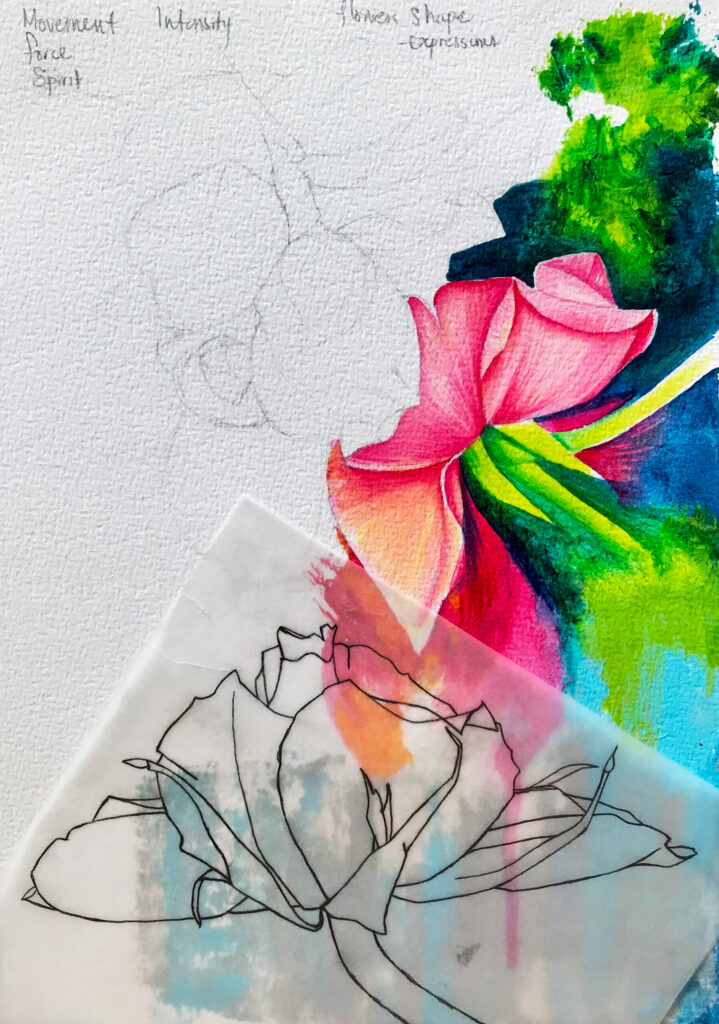
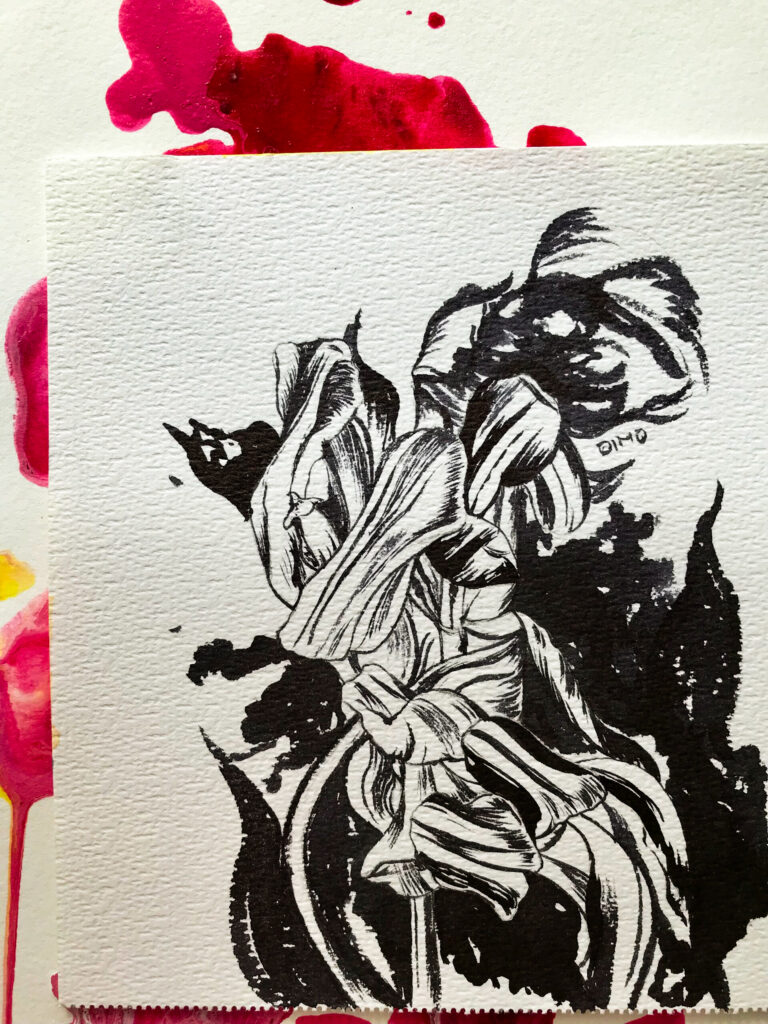
Once I have a general idea, I start experimenting. I fill my sketchbooks with drawings and try out different shapes. I also play around with colors to see how they look together and what kind of feeling they create.
This sketching and color testing is how I begin to build the foundation for my paintings, and I’ll be sharing my personal approach with you in this post.
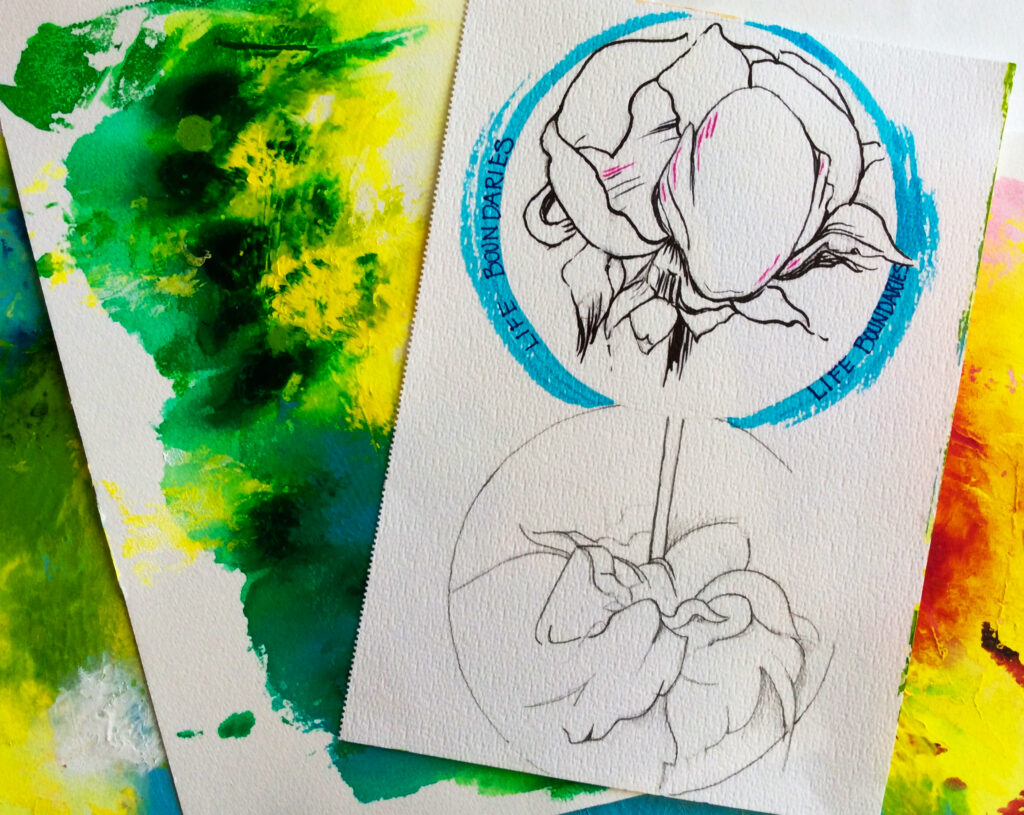
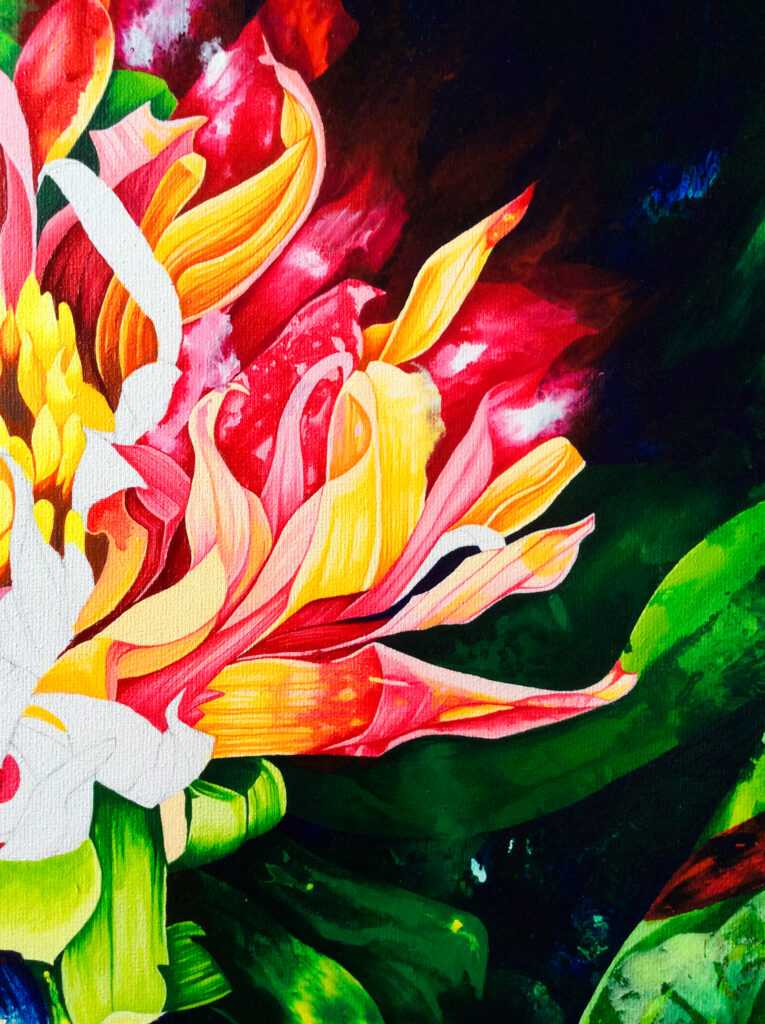
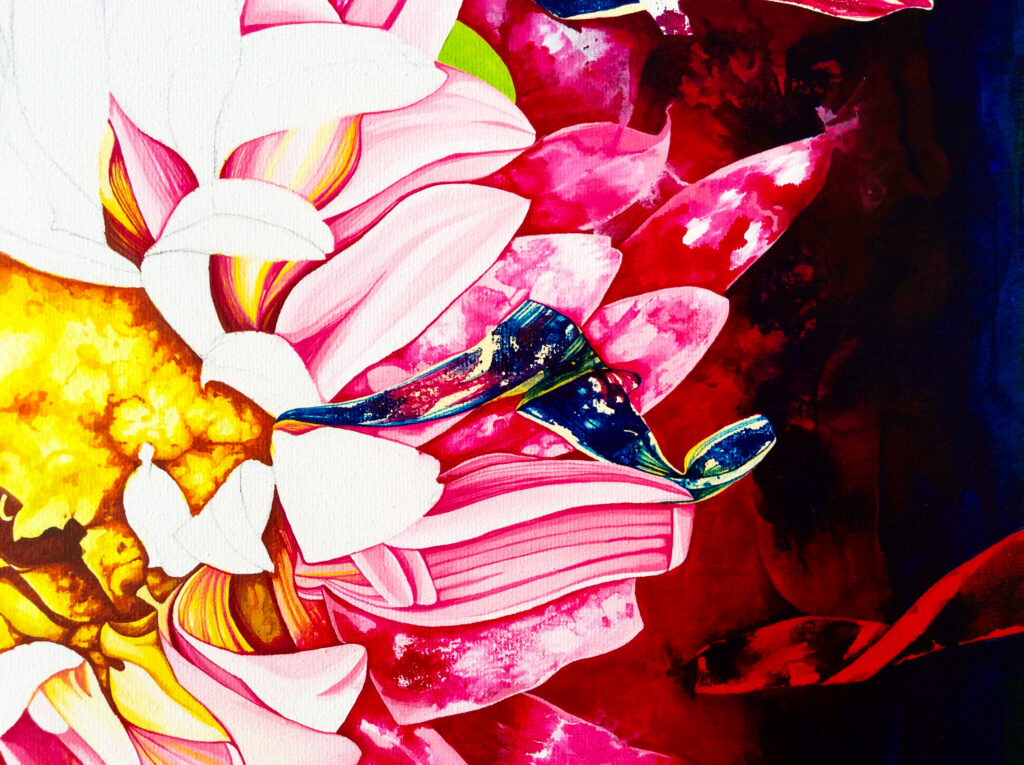
Through my painting, I’ve developed a way of building up the image using layers of paint. Over time, I started thinking of these layers as distinct spaces or “planes” within the artwork.
I generally work with what you might think of as a background, a middle-ground, and a foreground. But I also introduce an additional plane that sits on top of all of these. This extra space represents the mysterious or unknown aspects I’m exploring.
For me, each layer of paint in the middle-ground and background isn’t just a covering; it’s a separate plane with its own significance and place in the overall picture. In the foreground, I typically feature a recognizable, real-world object, and this is often the only thing I sketch out beforehand. However, depending on the idea behind the painting, sometimes there isn’t a clear foreground. In those cases, the object might still be in the process of being formed or might appear somewhat distorted within those layered planes.